“Navigating the U.S. Job Market in 2026: Trends, Tips, and Opportunities”

Now we are into the new year of 2026 & I am really excited to see what is going to happen with today's unpredictable job market especially in the United States of America. In early 2026, the U.S. job market is characterized by a "selective" hiring environment with an overall national unemployment rate projected to peak at approximately 4.5% to 4.6% in the first half of the year.

IT (Information Technology) Sector
The tech market is shifting from broad "generalist" hiring to high-demand "specialist" roles.
High-Demand Roles: AI/Machine Learning engineers, data scientists, cybersecurity analysts, and cloud architects.
Declining Areas: Entry-level coding and general software development roles have seen a significant decline in job postings due to automation and LLM-based coding efficiency.
Skill Requirements: Employers increasingly prioritize AI fluency and "skills-first" hiring, often valuing specific certifications and evidence of impact over traditional degrees.
Salaries: Median tech wages remain high at approximately $112,667, with specialized AI roles reaching average base compensations above $200,000.
Non-IT Sector
Non-IT hiring is defined by structural growth in essential services and physical infrastructure.
Healthcare & Social Assistance: This remains the strongest growth sector. Top roles include nurse practitioners, medical assistants, and home health aides.
Clean Energy & Skilled Trades: Solar PV installers and wind turbine technicians are among the fastest-growing occupations as the U.S. continues its green energy transition. Skilled trades like electricians and construction laborers also see intense demand.
Professional Services: While law, accounting, and management consulting are still adding jobs, they are doing so at a much slower pace than pre-pandemic levels.
Logistics: Demand for delivery drivers remains high, driven by the continued growth of online retail.
Why Growth Is Slower — and What That Means

1. Sluggish Hiring Across Many Companies
Many large employers are not planning significant headcount growth this year, often delaying decisions as they integrate AI tools and evaluate productivity strategies. This has created a cautious corporate hiring posture.
2. Technology & AI Are Double-Edged
While AI is boosting demand for specialists (AI engineers, data scientists, cybersecurity, cloud), it’s also causing companies to reconsider large-scale hiring in some traditional roles — leading to layoffs or slower openings in a few areas.
3. Skill Gaps Are Real
Employers increasingly say the challenge isn’t lack of jobs but lack of candidates with the right skills. That means jobseekers with relevant training often have an edge.
Where Jobs Are Growing (and Where They’re Not)
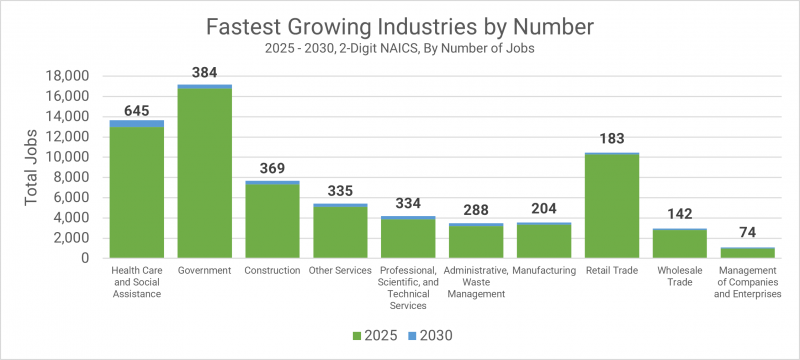
Healthcare & Social Assistance
This remains the top source of new jobs thanks to demographic demand (aging population, chronic care needs). BLS projections over the next decade point to healthcare leading job growth, especially in nursing, home care, and allied professions.
Professional, Scientific & IT Services
Demand for AI, cloud, cybersecurity, analytics, and digital infrastructure roles continues to outpace the broader market, even as general tech hiring moderates.
Clean Energy & Skilled Trades
Renewable energy (solar, wind) and skilled blue-collar roles are expanding faster than average, partly driven by infrastructure investment and the shift to sustainability
🔻 Sectors Facing Headwinds
Retail & Administrative Support
Automation and digital transformations are reducing openings in routine clerical roles and some traditional retail positions.
Certain Corporate & Federal Roles
Some large employers are trimming or freezing hiring as they adapt to economic and technological uncertainty.
What Jobseekers Should Know in 2026

1. Skills Matter More Than Degrees
More employers are prioritizing skills, certifications, portfolios, and demonstrable experience — especially in tech and emerging fields.
2. Networking Wins
Applying online alone often isn’t enough. Connecting directly with hiring managers, building industry relationships, and showcasing real work can be more effective.
3. Be Flexible (Remote/Hybrid)
Remote and hybrid roles remain common, expanding opportunities geographically and offering flexibility that many workers now value.
4. Upskilling Pays Off
Certifications in AI, cloud, healthcare specialties, renewable energy tech, and cybersecurity can differentiate you in a market with modest overall growth.
Visa & Immigration Dynamics

Companies are cautious in sponsoring visas, prioritizing candidates in hard-to-fill or niche roles like AI engineers, data analysts and skilled trades are often more open to foreign talent.
Remote work sometimes allows immigrants to contribute to U.S. companies without physical relocation, but in-person presence is often preferred for key roles.
Immigrants with technical or healthcare skills continue to be in demand.
This means that qualified immigrants can still access stable, well-paying positions.
Looking Ahead: What This Means for 2027
The job market is moving toward:
Fewer but higher-impact roles
Continued AI integration
Lifelong learning becoming essential, not optional
Those who adapt early will be better positioned for future shifts.
Conclusion: A Market That Rewards Strategy
The U.S. job market in 2026 is not broken—it is selective.
Opportunity favors those who understand where demand is growing, invest in relevant skills, and position themselves with intention rather than expectation.
Thank You for Reading
Thank you for taking the time to read this analysis of the U.S. job market in 2026. I hope it provided valuable insights for job seekers, professionals, and immigrants navigating today’s evolving workforce.
If you found this blog helpful, feel free to share your thoughts, experiences, or questions in the comments—your engagement helps make this space even more informative.
Wishing you success in your career journey and smart decisions in this selective, opportunity-driven job market!