MICU and Sepsis: How Critical Care Saves Lives
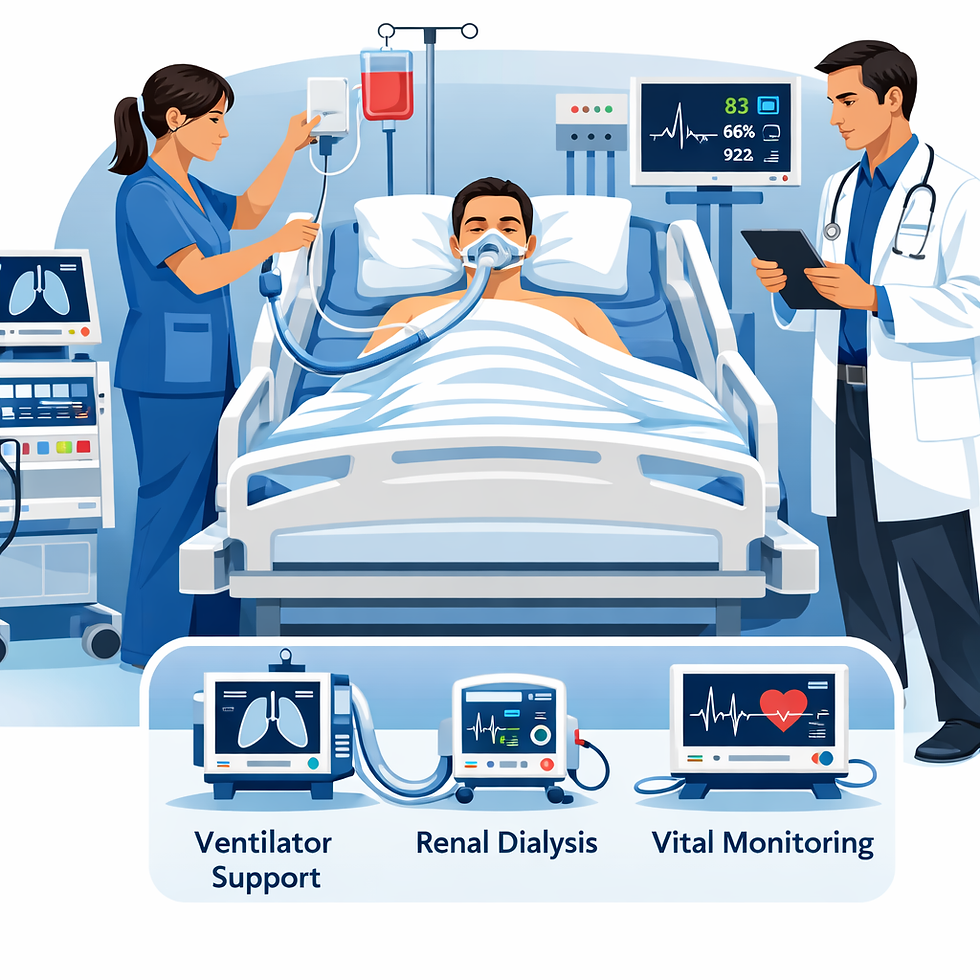
Treats Critically ill patients with:
Sepsis
Respiratory Failure
Kidney Injury
Heart failure
24/7 Advanced Life Support and Monitoring
Prevents & manages Multiple Organ Disfunction(MOD).
“Not all ICU beds are the same”.
Behind every critically ill patient, there is a specialized team, a specific type of ICU, and a unique care strategy.
A Personal Realization
Before working on ICU data, I never truly understood what an ICU meant. I thought it was simply a hospital ward filled with machines. But as I began analyzing MICU patient records—tracking sepsis, kidney failure, and organ dysfunction—I realized that the ICU is where life is balanced minute by minute. Every lab value, every vital sign, and every clinical decision can determine whether a patient recovers or deteriorates.
The MICU is not just a space; it’s the most important critical care unit, where advanced medicine and vigilant monitoring come together to save lives.
What Is the MICU?
The Medical Intensive Care Unit (MICU) is where patients with life-threatening medical illnesses receive continuous, specialized care.
MICU treats patients with:
Sepsis and septic shock
Acute respiratory failure
Acute kidney injury
Heart failure
Severe infections and metabolic disorders
Patients in the MICU often experience multi-organ stress, meaning more than one organ may be failing simultaneously.
The MICU Team & Workflow
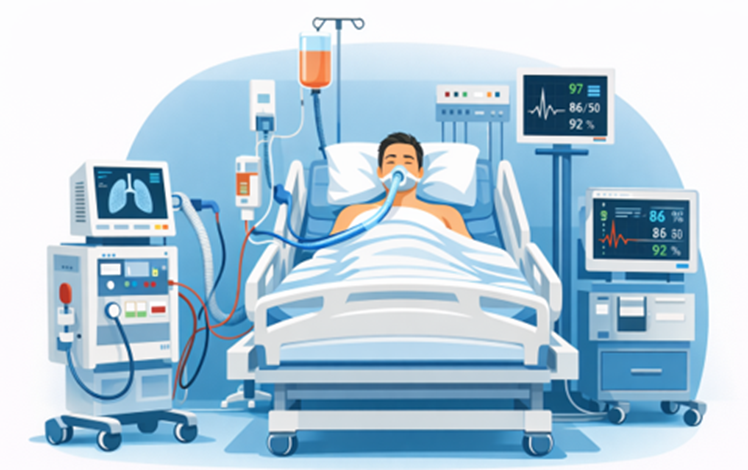
The MICU is staffed by a highly trained multidisciplinary team:
Critical care physicians
Nurses
Respiratory therapists
Pharmacists
Dietitians
Support staff
Each member plays a critical role: physicians make life-saving decisions, nurses monitor vital signs continuously, and respiratory therapists manage ventilators. The team works in hourly rotations, reviewing lab trends and patient progress to ensure no detail is missed. This constant vigilance is what differentiates the MICU from other hospital units.
Why Sepsis Is So Common in the MICU
Sepsis is one of the top reasons patients are admitted to the MICU.
It occurs when:
An infection enters the bloodstream
The immune system overreacts
Inflammation spreads throughout the body
Organs begin to lose function
Clinicians watch closely for:
Falling blood pressure
Low oxygen levels
Rising creatinine (kidney failure)
Rising BUN (toxic waste buildup)
Low HCO₃ (acid–base imbalance)
These measurements allow clinicians to detect early organ stress and act before the condition worsens.
Common MICU Procedures
Patients in the MICU often require advanced interventions to keep their organs functioning:
Mechanical Ventilation: supports patients who cannot breathe independently
Renal Replacement Therapy (Dialysis): removes toxins when kidneys fail
Central Lines & IV Medications: deliver fluids, antibiotics, and vasopressors directly into the bloodstream
Continuous Monitoring: bedside monitors track heart rate, oxygen, and blood pressure in real time
These procedures, combined with expert clinical judgment, allow patients to survive conditions that would otherwise be fatal.
How MICU Teams Use Time as a Life-Saving Tool
In the MICU, time is just as important as medicine. When a patient develops sepsis, every hour of delay increases the risk of organ failure and death. That is why MICU teams do not wait for a patient to collapse — they act on early warning signs.
Doctors and nurses continuously watch for:
A slow rise in creatinine
A subtle drop in blood pressure
Changes in breathing rate
A rising white blood cell count
These small changes often appear hours before severe organ failure begins. When detected early, the MICU team can adjust fluids, antibiotics, oxygen, or medications before the patient reaches a critical stage. This is one of the biggest reasons MICU patients survive conditions that would otherwise be fatal.
Monitoring Organ Function & Trends
The MICU relies on lab values and trends rather than a single reading to track patient severity.
ORGAN | What is measured | Why is it matters |
Kidneys | BUN, Creatinine | Shows waste buildup & kidney stress |
Lungs | Oxygen, CO₂ | Shows breathing efficiency |
Blood | WBC, Platelets | Shows infection & clotting risk |
Metabolism | HCO₃ | Shows acid–base balance |
Why MICU Care Is Different from Regular Hospital Care
In a normal hospital room, vital signs may be checked every few hours. In the MICU, they are monitored every second.
Patients are connected to:
Heart and rhythm monitors
Oxygen sensors
Continuous blood pressure devices
Urine output tracking systems
This allows clinicians to see how the body is responding in real time. If blood pressure drops or oxygen falls, the team responds immediately — sometimes within seconds. For sepsis patients, this rapid response can mean the difference between recovery and multi-organ failure.
Trend Illustration
Rising BUN/creatinine → Kidney stress
Falling HCO₃ → Metabolic imbalance
Intervention (fluids, dialysis, oxygen) → Organ stabilization
Even without dashboards, this trend-based visualization helps readers understand how clinicians detect early deterioration.
MICU Data Monitoring
In modern MICUs, data drives decisions:
Vital signs and lab results are monitored continuously
Trends, rather than single readings, guide interventions
Color-coded status boards or line-trend illustrations can indicate organ improvement or deterioration
This approach ensures that subtle warning signs are never missed, allowing timely interventions that save lives.
From Numbers to Life-Saving Decisions
In the MICU, lab values are not just numbers — they are warning signals.
For example:
Rising BUN and creatinine show kidney stress
Falling HCO₃ signals dangerous acid buildup
Low oxygen levels show lung failure
Doctors use these patterns to decide:
When to give fluids
When to start dialysis
When to increase oxygen or ventilator support
This data-driven care allows the MICU team to stabilize organs before irreversible damage occurs.
The Power of Early Intervention
Consider a patient admitted with severe sepsis caused by pneumonia. Within hours, blood pressure dropped, creatinine rose, and oxygen levels fell. Using lab trends and organ monitoring, the MICU team quickly started antibiotics, fluid resuscitation, and ventilator support. Over several days, careful monitoring and targeted treatment allowed the patient’s organs to stabilize.
And that’s how MICU interventions, combined with data and trend monitoring, turn life-threatening emergencies into recoveries.
Final Thought
The MICU is the frontline for patients battling sepsis and life-threatening organ failure.
Continuous monitoring of vital signs and lab values allows early detection of deterioration.
Trends in BUN, creatinine, oxygen levels, and HCO₃ guide timely, life-saving decisions.
Advanced support such as ventilators, dialysis, and IV medications keeps failing organs functioning.
The combination of expert clinical teams and real-time data gives critically ill patients their best chance to survive and recover.
NOTE : “Inside the MICU, every number tells a story, and every minute matters — turning data, care, and compassion into the difference between organ failure and recovery.”