Deep Learning in Bioinformatics

Updated: Jan 15
In today’s big data era, biology has become a data driven science and AI plays a significant role in most biological research. You can learn an outline of how Data Science is used in Drug development and discovery from this link.
Deep learning plays a significant role in most biological research, especially when it comes to gene sequencing, drug development, system biology and many other domains to analyze and interpret biological data.
Machine learning is used in Bioinformatics to make predictions regarding protein-protein interactions, gene expression and disease diagnosis.

Deep Learning and Bioinformatics
With the advancement in computational technology and big data, deep learning has become the most successful machine learning algorithm in bioinformatics. While traditional machine learning algorithms need human intervention to feature, deep learning can learn higher level features directly from the data.
Biology contains many complex level features that cannot be modelled by mathematical formula, and it is where deep learning comes handy.
Deep Learning Tools Applied in Bioinformatics
The following tools are widely used for various aspects of bioinformatics research, in understanding complex biological processes, protein design, functional annotations, disease mechanisms and personalized medicine.
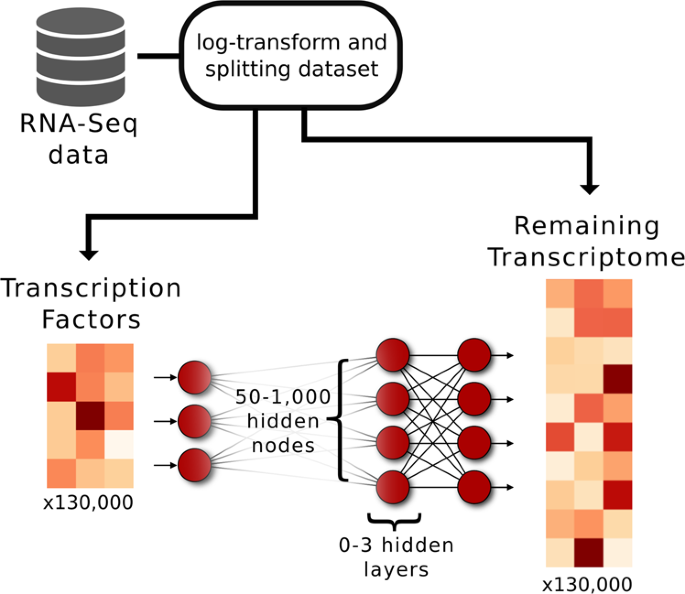
DeepBind is used in the prediction of protein bindings to DNA and RNA sites and the effect of genetic mutation on these binding sites. This tool uses the convolutional neural networks to identify the binding patterns. Data from Protein Binding Microarrays are used to train this model.
Deeperbind is an extension of Deepbind which uses RNN for long range dependencies of the sequences
DanQ is the hybrid model which uses CNN and RNN to predict the properties and function of the DNA sequences
DeepCpG is used to predict the methylation states in single cells using bisulfite sequencing data. By employing a combination of convolutional and recurrent neural networks. This tool is helpful for studying development, cellular differentiation, and diseases associated with epigenetic changes, such as cancer. Due to small amount of DNA genome starting material in every cell, the single cell methylation analysis is limited by DeepCpG .
DeepGene is a tool used to identify cancer using gene mutation and classify the subtypes of cancer accurately. It has three major steps, clustered gene filtering (CGF - based on mutation occurrence frequency of the gene data), indexed sparsity reduction (ISR) and DNN based classification. One of the challenges will be due to heterogenic features of the genetic sequence, while the model is trained with specific datasets.
DeepFam is used for protein family modeling and prediction. While protein sequencing are done by next generation sequencing tool (NGS) to find its functions, it may not be cost efficient. DeepFam is an alignment free protein family modeling tool. By employing a 1D convolutional neural network (CNN), DeepFam captures local and global sequence features, resulting in highly accurate family predictions. The accuracy of the model is measured using cross validation tests of how good the protein family membership assignments of the sequences or the protein functions can be made.
DeepLoc is a multi labelled predictor that predicts one or more subcellular localization of proteins. It uses the combination of convolutional and recurrent neural networks and captures both sequence-based and evolutionary information, resulting in highly accurate localization predictions. This tool is crucial for understanding protein function, protein-protein interactions, and cellular processes in various organisms.
DeepPath is used to rapidly generate a physically realistic pathways between known protein states. It integrates physics based approach to predict protein dynamics. DeepPath learns the regulatory relationships between genes, providing insights into the complex regulatory mechanisms that govern cellular processes, thus contributing to disease recognition and therapeutic analysis.
ScanNet is a geometric deep-learning model that directly learns features from protein structures to predict functional sites such as binding sites for small molecules, other proteins, or antibodies. It is an end to end geometric DNN model that learns the features directly from the 3D structures. It effectively detects protein-protein and protein-antibody binding sites and predicts epitopes of the SARS-CoV-2 spike protein.
DeepVariant is one of the highly accurate DNN tool, used to identify the genetic variants. It uses the CNN to identify the genetic variation from the Next Generation Sequencing Data, thus helpful in diagnosing the genetic modification due to disease and contributing to the personalized medicine.
Applications

Genome Sequencing
The genetic information of a species is the basis in most bioinformatic research. So, genome sequencing is one of the first tasks to be performed. MetaVelvet-DL algorithm constructs de Bruijn graphs from the input sequencing data, partition the graphs and improves the genome assembly and better resolution of the microbial community.
The most common sequencing data (DNA, RNA, amino acid sequences) can be obtained easily from next generation sequencing (NGS), which is very affordable.
Protein Structure
Deep learning has been widely applied to protein structure prediction research. Due to high cost and complexity, protein structure prediction has always been a challenge. DL is used in this field due to unsupervised multiple sequence alignment.
Studies have used approaches like predicting the secondary structures or the torsion angle of the protein. Emergent architectures are used in protein structures prediction research. AlphaFold2 implemented by Deepmind, has demonstrated a high accuracy protein structure implementation.
Protein Function
Another important step after finding protein structure is protein function, which is mapping target protein to other cellular components. This convey a lot of information and there is no direct mapping between the two. Hence there is very limited information to train the model. But this had been overcome by DeepGO incorporated CNN to learn sequence-level embeddings and combines it with knowledge graph embeddings for each protein obtained from Protein-Protein Interaction (PPI) networks.
Gene Expression
Convolutional neural network is used in solving problems involving biological sequencing especially gene expression. DL models give more accurate gene expressions analysis. Large datasets from DNA microarrays and RNA sequencing are analyzed using DL.
Biomedical Imaging
DNN has been applied for learning anomaly classification, segmentation, recognition and brain decoding. Plis et al. classified schizophrenia patients from brain MRIs using DBN, and Xu et al.
Disease Diagnosis and Drug Discovery
Disease diagnosis is one of the vital uses of DL. It is used to classify and identify the diseases based on clinical symptoms, lab test results and genome sequencing. Treating patients using deep learning is at infancy phase. But its usage to learn the drug protein interaction and gene expression, plays an important role in the personalization and optimization of the drugs.
Challenges
Not every models have become successful in computational biology, due to lack of annotated data, difference in training and real world application.
Despite many promising outcomes and accuracy from deep learning, the major challenges come with the requirement of high-quality data. Large sized complex data is required to train the deep learning models.
Deep learning is often called black boxes due to the complexity of the data and difficulty of interpreting the output.
The tools can become overfitting due to repeated training features.
Biological data generated by experimental techniques might have noise and error that might affect the performance and accuracy of DL models.
Data preprocessing is required to reduce the noise and error in the input data to improve the performance of DL models.
Deep learning in bioinformatics might need a large storage space due to high volume of bioinformatic data and usage of large data for training models.
Reference